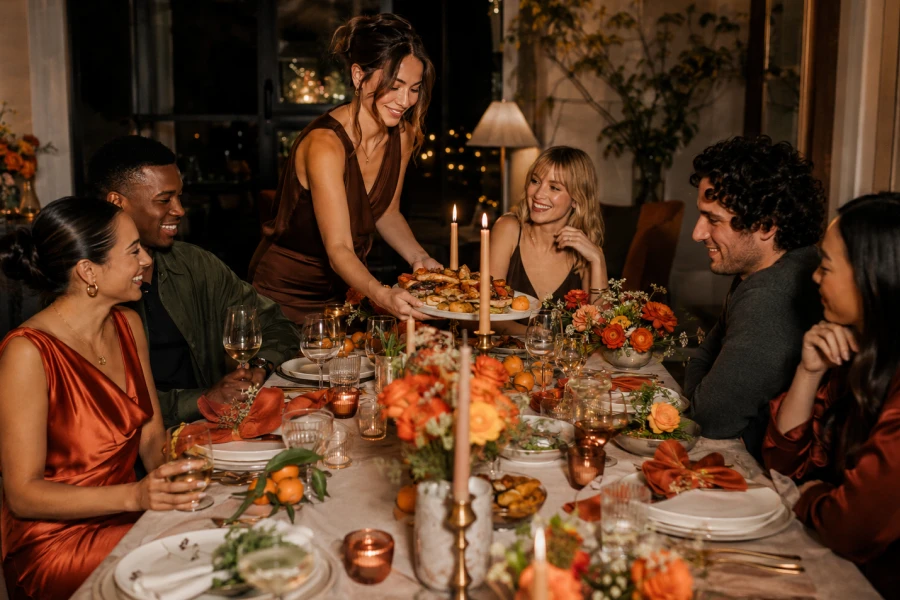
A dinner party can feel elegant without becoming exhausting. Holiday dinner party planning works best when it follows a rhythm instead of a long list of last-minute demands. Think of the event as a sequence of moments rather than one enormous task. Guests arrive, settle in, eat, talk, and leave with a feeling about the evening. Your job is to make those moments flow naturally. Start by choosing the kind of dinner you can realistically enjoy hosting. Then build the menu, table, and timing around that choice. Keep the plan clear enough to guide you but flexible enough to allow conversation. A good holiday dinner feels cared for, not overproduced. That balance creates a gathering guests will want to return to.
A simple structure keeps the evening from becoming chaotic. Begin with the guest count, available seating, and serving style. These decisions affect almost everything else. Once they are clear, you can choose the menu and timing with more confidence. A well-organized holiday hosting timeline helps you separate early tasks from final details. Plan shopping, prep, cooking, and table setting in stages. This gives you a better sense of what must happen on the actual day. It also shows where you can simplify. The goal is not to fill every hour with activity. It is to create enough structure that you can stay calm when guests arrive.
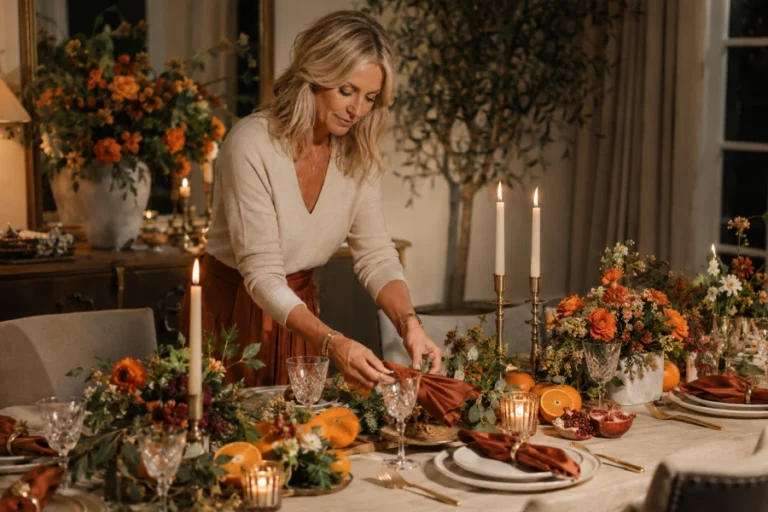
Before deciding on décor, imagine how you want people to feel at the table. Do you want the meal to be intimate, festive, relaxed, or lively? That answer should shape the seating and serving style. A cozy dinner may benefit from shared platters and layered textures. A more formal gathering may call for individual courses and a clearer rhythm. Keep centerpieces low enough for conversation. Choose seating that makes people comfortable for more than a few minutes. Add just enough seasonal detail to make the table feel special. The table does not need to impress guests from across the room. It needs to support the people sitting around it. Comfort and conversation are always the strongest design choices.
Ambitious menus often create unnecessary pressure. Choose recipes that fit your skill level and available kitchen space. Build around one main dish that feels special. Then add sides that can be made ahead or served at room temperature. A practical festive menu coordination approach prevents every dish from needing attention at once. Use ingredients across multiple recipes when possible. This saves money and reduces waste. Keep one backup option ready for unexpected needs. You do not need to serve a huge variety to make dinner feel generous. A smaller menu with good pacing often feels more thoughtful. It lets you spend less time managing the stove and more time with your guests.
Timing shapes the feeling of the entire evening. Avoid rushing people through the meal or leaving long gaps without a purpose. Give guests time to arrive and settle before serving food. Offer a drink or small bite that does not require much attention. Then move naturally toward dinner when the room feels ready. A good pace allows conversations to develop. It also gives you time to handle small kitchen tasks without disappearing. Consider what can be finished before people arrive. Keep the final cooking steps as simple as possible. The evening should not depend on perfect timing down to the minute. A flexible rhythm makes everyone feel more relaxed. That is especially important during busy holiday seasons.
Room layout can make a dinner feel easier from the beginning. Set drinks in one area and food in another when possible. This gives people a reason to move without creating crowding. Keep pathways clear between the kitchen, table, and seating areas. The best guest flow planning helps guests understand the space without needing directions. Consider lighting carefully, especially as the evening gets darker. Warm light can make the room feel intimate, but guests still need to see one another comfortably. Background music should support conversation rather than compete with it. These choices may seem small, yet they strongly influence how relaxed the room feels. Good hosting often happens through this quiet kind of preparation.
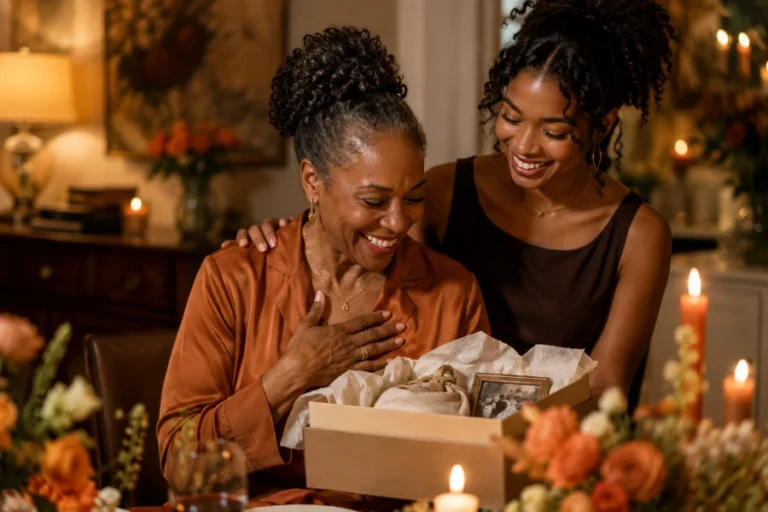
Do not treat the final course as the end of the gathering. Leave room for guests to linger over dessert, coffee, or another conversation. A relaxed ending can make the whole night feel more generous. Prepare a few easy options for people who want to stay longer. Keep cleanup out of sight whenever possible. You do not need to restore the entire kitchen before anyone leaves. Let yourself enjoy the final minutes too. The best holiday dinners often end with guests still talking while the table looks slightly lived in. That is a sign the evening worked. Your preparation created a place where people felt comfortable staying. In the end, that is the most meaningful result of thoughtful holiday hosting.

Leave a comment